Juventus' financial nous key in rise to Champions League final

Juventus will return to the top table of European football this Saturday when they step into Berlin's Olympiastadion to take on Barcelona in the Champions League final.
The Old Lady are a team in the truest sense and their progress to this year's Champions League final, and success in securing a fourth consecutive Serie A title, can be attributed to manager Massimiliano Allegri forging a cohesive, well-drilled unit full of experienced heads. Indeed, six of the players who started in the 1-1 semifinal second leg against Real Madrid, and are likely to feature in the starting XI in Berlin, are aged over 30.
But behind the likes of Andrea Pirlo, Giorgio Chiellini and Gianluigi Buffon is another equally impressive team that has helped them get back on their feet after they were demoted to Serie B and stripped of two Serie A titles in 2006 -- an event which became known as the Calciopoli scandal after club officials were found guilty of trying to influence the appointment of referees.
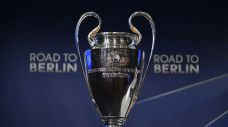
CHAMPIONS LEAGUE FINAL (JUNE 6, 2:45 ET / 6:45 GMT)
- Marcotti: Juve and Barca offer a final to savour
- Moreno: Barcelona have the edge over Juventus
- Hunter: Ter Stegen was Barcelona's real hero
- Horncastle: Berlin final was destiny for Juventus
- Corrigan: Juve overcome shaky start, go through
- Delaney: Neymar's first-half goals doom Bayern
- Moreno: Barcelona have the edge over Juventus
- Hunter: Ter Stegen was Barcelona's real hero
- Horncastle: Berlin final was destiny for Juventus
- Corrigan: Juve overcome shaky start, go through
- Delaney: Neymar's first-half goals doom Bayern
Juventus' resurrection from the lowest point in their history has been led by chairman Andrea Agnelli -- appointed in 2010 and part of the fourth generation of his family to run the club they have owned for more than 90 years.
After cutting his teeth at some leading blue-chip multinational companies, Agnelli has initiated a tenacious business culture at Juventus that has been shaped by his background as an Anglophile and his days as an Oxford University student when he travelled to North London to watch Arsenal. Central to the club's revival has been the building of the 41,000 capacity Juventus stadium: on the site of the old Stadio delle Alpi, making the Turin side the only one in Serie A to own their own ground.
The new stadium was actually commissioned before Agnelli's appointment but, in planning how it should operate, he and other Juventus officials visited Arsenal's Emirates Stadium and studied the success of other English clubs to understand how they maximise revenue from merchandise, drinks and other commercial ventures.
After the trip, the decision was made to adopt the English model with the Juventus Stadium, which now boasts its own museum, elegant corporate hospitality facilities and other commercial add-ons after opening in September 2011.
Fausto Zanetton, a former banker who provides financial advice to a number of Italian football clubs, told ESPN FC: "Agnelli is a savvy businessman who has surrounded himself on the board with likeminded business brains. His focus has been all about reviving the Juve brand. Owning their own stadium has given them a huge advantage over their rivals and helped to make them, once again, one of Europe's strongest sides."
However, Italy's leading clubs lag behind their European counterparts when it comes to generating revenue. According to the latest Deloitte Money League,Juventus are the country's richest club, ranked 10th in the world with annual turnover of £200 million.
But their total matchday revenue of £34.3 million and commercial revenue of £71.1 million is dwarfed by that of their Champions League rivals Barcelona, who manage £97.7 million and £155.3 million respectively.
Juventus are still in the red but, under Agnelli's stewardship, losses have been cut by one-third over the past four years to just under £45 million according to club accounts. The family also own car manufacturers Fiat and Chrysler and have harnessed the success of its core business for the benefit of the team. Juve's £13 million per year shirt sponsorship deal (the highest in Italy) is with Jeep, another part of the Agnelli empire.
Along with the new £71 million stadium, a new shopping complex also was built and the rights to manage it sold to an Italian retail company for £21 million, helping to offset construction costs.
While another aspect of the English model which Agnelli is borrowing comes from the idea to link the new stadium with wider regeneration. The Emirates Stadium led to the creation of new homes and businesses in North London, while Arsenal's local rivals Tottenham Hotspur have even more ambitious plans for amenities around their new stadium -- which they hope will be ready in 2019 -- as way of maximising income.
Juventus already have signed a deal with the city council of Turin for the redevelopment of the Continassa district, which adjoins their stadium. The multimillion pound venture will lead to the creation of a new club headquarters, a training centre, hotel, school, homes and an entertainment complex. New parks, sites for businesses and open spaces are also being created as part of the urban regeneration project.
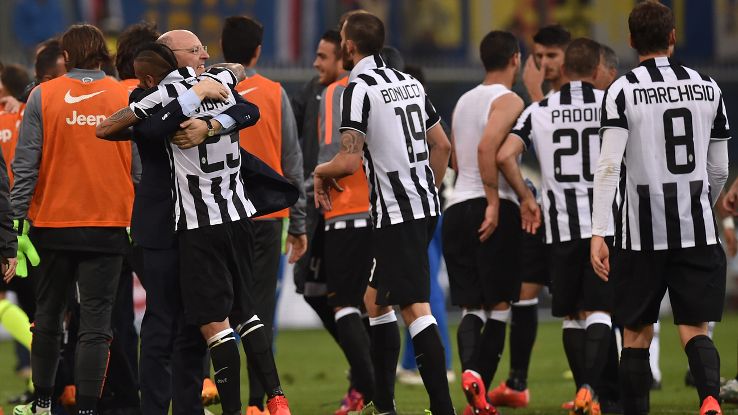
Of course to find real success in Europe, you have to focus on the pitch as well and the financial nous in the boardroom has been underpinned by an astute transfer policy overseen by director general Giuseppe Marotta, seen as one of Agnelli's most inspirational appointments in May 2010.
Keeping one eye on the balance sheet, Marotta took a gamble on Paul Pogba to sign him when Manchester United released the midfielder in 2012; snapped up Pirlo from AC Milan; and secured the services of veteran Patrice Evra from Manchester United -- all on free transfers. He also bought Arturo Vidal from Bayer Leverkusen and Carlos Tevez from Manchester City for a combined fee of under €25 million; with their value now well over that amount each.
So, importantly, Juventus have no pressure to sell any of their stars. They can turn away mega-bids for Pogba knowing full well that they are now on firm financial footing once more. Meanwhile, they can afford to attract the next generation of players to Turin, with Palermo starlet Paulo Dybala set to arrive for around €40 million and Germany World Cup winner Sami Khedira the latest in Marotta's long line of free transfer coups.
Barcelona may be favourites going into this Saturday's Champions League final, but the Bianconeri will be hoping that getting their sums right off the pitch will give them the best chance of lifting trophies on it.
Vivek Chaudhary is a journalist who writes for The Independent and other leading media. He's currently writing a book about the Indian sport of kabaddi.

No comments:
Post a Comment